
Platforms
Kingmakers performance
Nobody outside the playtests can measure it yet. What exists is the developers’ own account: performance was one of the two reasons the game was delayed, the goal is a true 60 frames per second on mid-range PCs without frame generation, and the game director has answered players about stutter, older hardware and stability on the Steam forum.
The target, in three numbers
60 fpstrue frame rate on mid-range PCs, the goal named in the delay letter
RTX 3060the class of card the director says can certainly run it
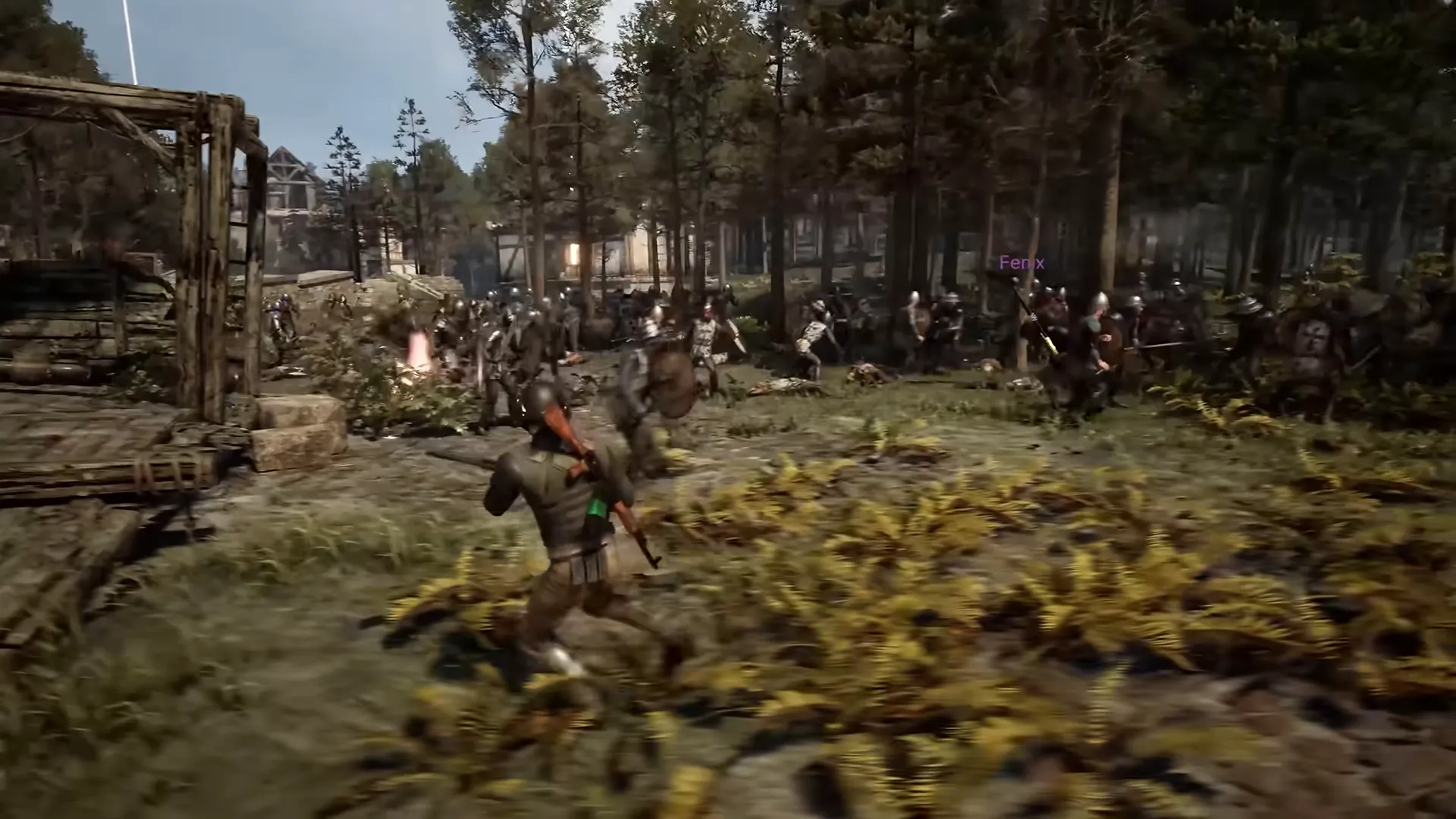
Tens of thousandssoldiers in a mission, each with their own AI, by the studio’s description
The letter that called off the Early Access date put performance next to content polish as the reason: the studio wanted the game on “true 60fps to midrange PCs, without the need for fake frames”. The whole letter is on why Kingmakers was delayed, and the listed hardware is on Kingmakers system requirements.
How they render thousands of soldiers at once
Asked how the game can be as fast as claimed without a “quantum computer,” the director wrote the longest technical answer he has given on the forum, and pointed to an outside video rather than one of the studio’s own:
“We have a lot of unique architecture driving Kingmakers. In a nutshell, the reason you don’t see games put thousands of soldiers on the screen primarily comes down to skeletal animation. In almost every game ever made this is done on the cpu for every enemy on screen every frame. This is extremely heavy, and is the primary aspect limiting unit count in games. Not AI, not pathfinding, not rendering.”
“Custom and very complex shaders to drive 8 way blends and high fidelity vertex animations for most soldiers. They are technically particle effects.”
“This is the really important part. We seamlessly switch our soldiers back and forth between being vertex animated “particles” to cpu driven skeletal soldiers constantly during gameplay. The player can never tell it is happening because it is so seamless. We have debug tools we use when playing because there is no way to know from a video which is which.”
His own summary of why that matters: it is the low-end case that benefits most, because “this technology can gracefully degrade to support even very old gpus on lower graphics settings, because the only aspect of it that is heavy is how many vertices a soldier has”, not the CPU work every other engine spends on skeletons. The video he linked as the source for the “it runs well” claim is a third party, technical breakdown, not a Kingmakers channel upload: Digital Foundry’s Inside Kingmakers.
The same thread has his number for the other half of the soldier count above, the bodies left over once they die:
“I have never played a game that has as many dead bodies on the ground as Kingmakers. A significant percentage of them persist on the ground indefinitely. The game allows around 1000 persistent dead bodies on the battlefield, and only ever clears them when more dead bodies are created.”
Asked how that compares to other games, he pointed to two, not Kingmakers’ own marketing:
“I mean lots of games do destruction, many even allow full terrain destruction like the recent donkey kong game(which runs on a switch 2, basically an ipad). It is well trod territory.”
“The closest analog is mount & blade 2, but its unit caps are way lower and the fidelity on the soldiers is more limited.”
So the comparison he draws is to Mount & Blade 2 for scale and to terrain destruction in other recent games, not to a studio benchmark. What the studio built on top of Unreal Engine 4 to get here is on Kingmakers developer and engine, and how that scale plays out on foot is on Kingmakers gameplay explained.
Stutter
When a player worried that Unreal Engine 4 games are known for stutter, the director pointed to a system the studio built:
“We have our own system that we built to handle PSO caching in addition to the built in unreal 4 one. That is likely the stutter you’re talking about.”
The reply says the studio built its own PSO caching system on top of the one that comes with Unreal Engine 4, and that this is likely the stutter the player meant. It does not say the problem is solved. The one hands-on report found so far, from a convention floor, does not discuss stutter.
Who works on it, and how stable the last test was
“We have dedicated people that only work on performance optimization. It is their entire job. This is something we care a lot about and are constantly working on.”
“In terms of bugs the most recent playtest was very stable. I personally designed the multiplayer framework and it is made to be extremely robust. It can handle significantly more lag than most games and maintain stability.”
Both are the developer’s own assessment of its own build. The second matters for co-op, where four players share a battle over the internet; how that works is on Kingmakers co-op and multiplayer.
Older and low-end PCs
Asked what he meant by testers using a wide variety of hardware, the director described a spread rather than a floor:
“A large variety of amd/nvidia gpus and intel/amd cpus.”
In the same reply he said he did not remember the lowest spec they had tried, but had seen the game run on very weak machines at the lowest settings, and that the aim is for it to scale down as far as possible. There is still no official number below the Epic page’s minimum tier, which lists an RTX 2060. For a handheld, see Kingmakers on Steam Deck.
Settings, 4K and 1440p
In a thread where players worried the game would lag, the director described a game with many graphics options, and what it takes to run them all at 4K:
“There are a lot of graphical settings available in the game, but if you want to run the game flat out at 4k max settings with 60+ fps, no dlss then you will need both a high end gpu & cpu.”
“That said, there are a lot of graphical toggles you can use to get the game running on a pretty low spec machine.”
A player with a very fast PC then asked what to expect at 1440p, and he said his own machine sits below theirs:
“I’m on a 4080 and I don’t think anyone has better than that in the office.”
“You should be able to run the game flat out at the highest settings at 1440p.”
Both are estimates in the director’s own words, not listed requirements. The listed hardware is on Kingmakers system requirements.
What a useful test should compare
The director’s hardware estimates above are not measurements for your PC. A quiet field, a siege, a battlefield full of bodies and a co-op session test different parts of the game. In particular, the director has said that fighting over earlier battlefields needs more measurement because of the persistent bodies. Explained in Paul Fisch on persistent battlefield bodies, Steam discussions
- Keep the setup the same
Record the build, resolution, preset, upscaling mode, CPU, GPU and RAM. Compare runs at the same settings.
- Record the scene, not just an FPS number
Note whether a hitch appears when you first enter an area, during destruction, or when returning to a battle. Include how long it lasts.
- Separate co-op connection issues from rendering
Note player count and whether solo at the same settings behaves differently. A co-op hitch alone does not identify its cause.
Keep a useful performance report
If you get playtest access, record what actually happens on your PC. Use the same settings when comparing scenes. Check the test’s recording and sharing rules before posting footage.
Kingmakers performance notes
Hardware: Not recorded
Resolution, preset, upscaling: Not recorded
Scene: A large battle
Observed FPS, stutter and duration: Not recorded
Build/version: add the build you tested
Player count: add solo or the number of co-op players
You can also select and copy the preview. Entries stay on this page and are not submitted anywhere.
Access is still through the Steam playtest request. The listed system requirements remain the place to compare hardware; this form does not predict whether your PC will run the game.
Still unanswered
Open: High refresh rates and ultrawide4K at maximum settings is answered above, without a frame-rate target beyond 60. Refresh rates above that and ultrawide screens have not been addressed. The 4K thread: Steam discussion thread asking about 4K performance
Open: FSR, frame generation and the full DLSS optionsThe director’s replies speak of running with and without DLSS; FSR and frame generation are not mentioned. The 60 fps goal is stated as without frame generation, which describes the target, not what settings the game will offer.
Open: Settings for each hardware tierNeither Steam nor Epic gives a resolution or frame-rate target for its minimum and recommended tiers.
Open: Final requirementsThe director has said they will be locked down closer to release.
Independent numbers will only exist once far more people are playing it. The first step toward that is the Steam playtest, explained on the Kingmakers playtest page.